Learn the game. Master the thinking.
Chess Consultant Darrin Berkley draws on 20+ years of top-ranking chess expertise to teach and counsel students of every level. Tutoring takes place online through Zoom or Microsoft Teams, with rates set on an individual basis.
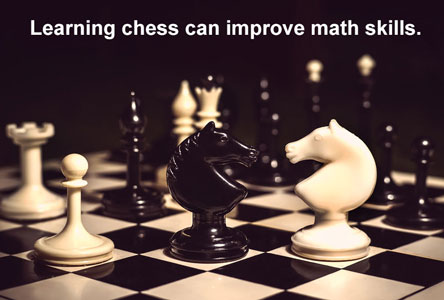
Why learn chess?
Chess is a game of generalities, details, and calculation. Generalities mean taking one idea and applying it across many different situations — one of the hardest skills required in mathematics courses. Every profession demands close attention to detail, and, as we all know, poor calculation can have lifelong effects.
Chess also requires a great deal of patience. Wouldn’t it be nice if more people were patient with each other? Chess does an excellent job of building that patience — along with critical thinking and the habit of thinking several steps ahead, skills that matter well beyond the board.
Chess can be genuinely fun, even while it’s challenging. Learning and enjoying yourself at the same time is one of the best reasons to pick up the game.
Chess rules, start to finish
It’s not nearly as difficult as people think. Stay relaxed and follow along.
Setting up the board
The left-hand corner square closest to the player with the white pieces must be a black square. White always plays first, and queens are always placed on their own color.
Starting at the lower-left corner (square A1), the white pieces are set up left to right: rook, knight, bishop, queen, king, bishop, knight, rook — with the eight white pawns filling the row in front of them. Black is set up the same way on the opposite side of the board.
How the pieces move
King — moves one square in any direction, and cannot move onto a square occupied by another of its own pieces.
Queen — the most powerful piece on the board. Moves any direction, any number of squares, but cannot jump over other pieces.
Rook — moves horizontally or vertically, any number of squares, in a straight line.
Bishop — moves and captures diagonally only.
Knight — the only piece that can leap over other pieces. It moves in an L-shape: two squares in one direction, then one square perpendicular. It changes square color every time it moves.
Pawn — moves straight ahead only (two squares on its first move, one square after that), but captures diagonally one square forward.
Check and checkmate
Any attack on the enemy King is called a “check.” A King in check must get out of it by capturing the checking piece, moving out of the line of attack, or blocking the attack with another piece. If none of those are possible, the King is “checkmated” and the game is over.
Discovered & double check
A discovered check happens when moving one piece reveals an attack from another piece behind it. A double check is the rarer case where the moved piece and the revealed piece both give check at once — leaving the King no option but to move.
Castling, promotion & en passant
Castling is the only move that repositions two pieces at once: the King moves two squares toward a Rook, and that Rook hops to the square beside the King. It’s only legal if neither piece has moved yet, the squares between them are empty, and the King is not in (or moving through) check.
Pawn promotion — a pawn that reaches the far end of the board must be promoted to a queen, rook, bishop, or knight (usually a queen, since it’s the most powerful piece).
En passant is a special, situational pawn-capture rule — an advanced topic worth learning once the basics feel comfortable.
Piece values
Queen — 9 points · Rook — 5 points · Knight — 3 points · Bishop — 3 points · Pawn — 1 point. These values help you judge whether a trade is in your favor.
How games are drawn
Games can end in a draw through perpetual check (an inescapable repeating series of checks), stalemate (a player to move has no legal move and isn’t in check), insufficient mating material (neither side has enough pieces left to force checkmate), or simple mutual agreement between the players.
New to chess, or ready to compete?
From a first game to serious tournament prep, we’ll start with where you are and build from there.
Schedule a Consultation